
By the Cardiomender Weight Loss & Aesthetics Medical Team (medically reviewed) The medical weight loss landscape has been forever altered by the rise of incretin mimetics, but nothing has generated quite as much scientific excitement as Retatrutide. Often nicknamed the “Triple G” agonist or “triple hormone” drug, Retatrutide is an investigational peptide that targets three…
By the Cardiomender Weight Loss & Aesthetics Medical Team (medically reviewed)
The medical weight loss landscape has been forever altered by the rise of incretin mimetics, but nothing has generated quite as much scientific excitement as Retatrutide. Often nicknamed the “Triple G” agonist or “triple hormone” drug, Retatrutide is an investigational peptide that targets three metabolic receptors rather than one or two. In clinical trials, it has shown weight reduction percentages that approach the efficacy of bariatric surgery. Yet, despite these striking figures, a common question is emerging in medical weight loss forums and clinical trials: “why am i not losing weight on retatrutide?”
If you are taking Retatrutide—whether as part of a formal clinical trial or through another prescribed pathway—and the scale has refused to budge, it is easy to feel defeated. However, a weight loss stall or plateau is a common and often temporary hurdle. It is frequently caused by early dosing protocols, shifts in your body’s composition, or subtle lifestyle overrides rather than a failure of the medication itself. At Cardiomender Weight Loss & Aesthetics in Pembroke Pines, FL, we guide South Florida patients through the complexities of next-generation therapies. This comprehensive guide will break down the science of why weight stalls happen on Retatrutide, what the clinical data actually says about its timeline, and the actionable, medically supervised steps you can take to break through a plateau. It also coordinates with our broader Retatrutide weight loss treatment information.
To help manage expectations, the table below outlines the average weight-reduction milestones observed in key clinical trials, such as the TRIUMPH-1 Phase 3 study, for the highest dose (12 mg) in adults without Type 2 Diabetes:
| Milestone | Average Weight Loss (%) | What is Happening Physically | Clinical Focus |
|---|---|---|---|
| Week 4 (Month 1) | ~3% – 5% | Induction phase (2 mg dose). Suppression of “food noise” begins. Body sheds water weight. | Building GI tolerance; managing early retatrutide side effects. |
| Week 12 (Month 3) | ~9% – 12% | Escalation phase (4 mg to 6 mg). Glucagon receptor begins rising energy expenditure. | Adjusting titration; auditing daily protein intake. |
| Week 24 (Month 6) | ~17.5% | Optimization phase (8 mg to 9 mg). Deep fat oxidation occurring in the liver and adipose tissue. | Tracking body composition to protect muscle mass. |
| Week 48 (Month 11) | ~24.2% | Peak therapeutic dose (12 mg). Most users achieve at least a 15% reduction in body weight. | Transitioning to long-term weight maintenance strategy. |
| Week 80 (Month 18) | ~28.3% | Sustained downward weight trajectory. Trial data show no plateauing up to this point. | Reviewing cardiovascular and lipid panels. |
| Week 104 (Month 24) | ~30.3% | Maximum clinical observation (extension study for BMI ≥ 35). Surgery-like body transformation. | Ensuring permanent lifestyle integration. |
*Note: These figures represent pooled averages from clinical trials; individual results may vary based on starting weight, biological factors, and adherence.
To understand why you might experience a temporary plateau, it is essential to understand the peptide therapy for weight loss science that makes Retatrutide unique. Most first- and second-generation weight loss injections target only one or two gut hormones. For example, semaglutide is a single GLP-1 receptor agonist, while tirzepatide is a dual GIP and GLP-1 receptor agonist.
Retatrutide is the first “triple agonist,” activating three distinct metabolic pathways:
A comprehensive peer-reviewed review published in PubMed Central (PMC11271400) explains that this triple-receptor activation is particularly effective at reducing metabolic dysfunction-associated steatohepatitis (MASLD) and liver fat content. This represents a major breakthrough in metabolic health. For a deep dive into how this compares to existing dual-agonist options, see our comparison between Retatrutide and Tirzepatide.
If you feel your weight loss has stalled, comparing your personal timeline with established clinical data can help determine if you are actually experiencing a medical plateau or if you are simply on a normal trajectory.
According to a systematic review and meta-analysis published in PubMed Central (PMC11420505), once-weekly subcutaneous Retatrutide delivers consistent, progressive weight reduction. In the Phase 2 trial led by Jastreboff et al. (*N Engl J Med* 2023), participants on the maximum 12 mg dose achieved a mean weight reduction of 17.5% at 24 weeks and 24.2% at 48 weeks. Furthermore, the 48-week data demonstrated that:
However, the trials also highlighted two crucial variables that explain slower weight loss. First, there is a clear “diabetes lag.” Individuals with Type 2 Diabetes typically lose weight at a slower rate than those without. In the Phase 3 TRIUMPH-2 trial (severe obesity with Type 2 Diabetes), the average weight loss was 20.8% at 80 weeks, compared to 28.3% at 80 weeks in the general obesity cohort (TRIUMPH-1). If you have underlying glycemic issues, your body may prioritize stabilizing blood sugar and resolving insulin resistance before shifting into deep fat burning. If you are just beginning treatment, you may naturally wonder, how long does retatrutide take to work? If you have previously been on other medications, you might also ask how long does Semaglutide take to work or how it compares; you can read our ultimate GLP-1 weight loss comparison to understand these different classes.
 why am i not losing weight on retatrutide[/caption>
If you are taking Retatrutide and your weight loss has paused or has not yet started, several clinical, physiological, and lifestyle factors could be responsible.
The most common reason for not losing weight in the first month is that you are still on a sub-therapeutic induction dose. Retatrutide requires a strict, stepwise dose escalation protocol. Patients typically start at 2 mg once weekly for the first 4 weeks to allow the gastrointestinal tract to adapt. The dose is then increased to 4 mg, and gradually up to 8 mg and the maximum 12 mg maintenance dose.
The 2 mg and 4 mg doses are primarily safety-focused induction steps, not therapeutic fat-burning doses. The landmark trials show that the most rapid, sustained weight loss occurs after patients transition to the 8 mg and 12 mg levels. If you are only in your first few weeks of therapy, the medication has not yet reached the concentration required to fully activate the glucagon-driven metabolic pathways. Expecting massive scale changes during the first month is a common mismatch of expectations.
The scale is a blunt instrument that measures total body mass—fat, muscle, bone, water, and undigested food. Because Retatrutide dramatically suppresses appetite, some users experience a severe caloric drop. If you do not consume adequate protein and engage in resistance training, your body will catabolize its own muscle tissue for amino acids.
This creates a dangerous double-edged sword. Muscle is highly metabolic tissue; losing it lowers your resting metabolic rate (RMR), which means your body burns fewer calories at rest. When your RMR drops, your weight loss can stall even if you are eating very little. Additionally, losing fat while retaining water can make the scale look flat, even though your waist circumference is shrinking. To avoid these metabolic traps, it is critical to understand how much of a calorie deficit is too much before forcing severe food restriction.
Because Retatrutide is currently an investigational drug and not yet FDA-approved for commercial sale, it is not available at traditional retail pharmacies. This has led to a surge in individuals purchasing compounded “research peptides” online or through unregulated, unsupervised compounding clinics.
This DIY approach introduces a major clinical hazard. Unregulated compounding pharmacies frequently produce batches with variable purity, inconsistent dosing, or active ingredient degradation. A matched-cohort clinical study published in late 2026 (*Preprints.org*) revealed a massive performance gap: unsupervised individuals taking compounded Retatrutide achieved an average weight loss of only 7.2%, compared to a highly supervised clinical cohort that achieved 15.5% weight loss over the identical period. Without professional medical diagnostics and high-quality, clinical-grade medications, a stall is highly likely. Navigating these gaps is why we emphasize the importance of medical weight loss vs commercial diet plans.
While Retatrutide is highly effective at reducing “food noise” (the constant, intrusive thoughts about eating), it cannot physically block calories from entering your body. It is entirely possible to “eat through” the medication’s effects.
A common lifestyle trap is consuming highly calorie-dense, processed foods. Because your appetite is suppressed, you might eat very small volumes but unknowingly select foods that are packed with hidden liquid calories, fats, or sugars (such as commercial smoothies, full-fat dairy, nuts, or heavily dressed salads). If your total caloric intake matches your current energy expenditure, you will hit a plateau. Learning what to eat on peptide treatments is just as important as the injection itself; relying solely on hormonal suppression without restructuring your dietary habits will eventually cause a stall.
If you are in the early stages of your weight loss journey, knowing how to tell if retatrutide is working before the scale moves is essential for maintaining motivation. This is why physicians look for “Non-Scale Victories” (NSVs) and physiological markers to confirm that the peptide is active in your system:
Monitoring these early signs is a key topic in our comprehensive medical weight loss FAQ.
Adherence is a critical pillar of weight loss consistency. If you miss doses or delay your injections due to fear of side effects, your therapeutic blood levels will fluctuate, leading to a stall.
According to the meta-analysis data in PMC11420505, Retatrutide is associated with a higher rate of non-severe, transient gastrointestinal adverse events, particularly during the early dose-escalation phase. These include:
To minimize these side effects and maintain a consistent injection schedule, physicians recommend eating small, low-fat, protein-rich meals, staying exceptionally hydrated, and working with a clinic that can provide antiemetic support if needed.
A dangerous trend has emerged in online peptide communities: “stacking” or combining Retatrutide with other agonists, such as Tirzepatide (Zepbound) or Semaglutide. The logic behind this trend is that combining multiple drugs will “override” a plateau.
From a clinical standpoint, stacking these medications is absolutely contraindicated. There are zero clinical trials validating the safety or efficacy of combining full-strength incretin mimetics. Doing so does not double your weight loss; instead, it exponentially increases your risk of severe, dangerous adverse events, including acute pancreatitis, severe dehydration from persistent vomiting, gallbladder disease, and profound hypoglycemia. If your current peptide is not delivering results, the solution is clinical dose optimization, metabolic lab screening, and nutritional adjustments under professional care—not dangerous self-prescribing.
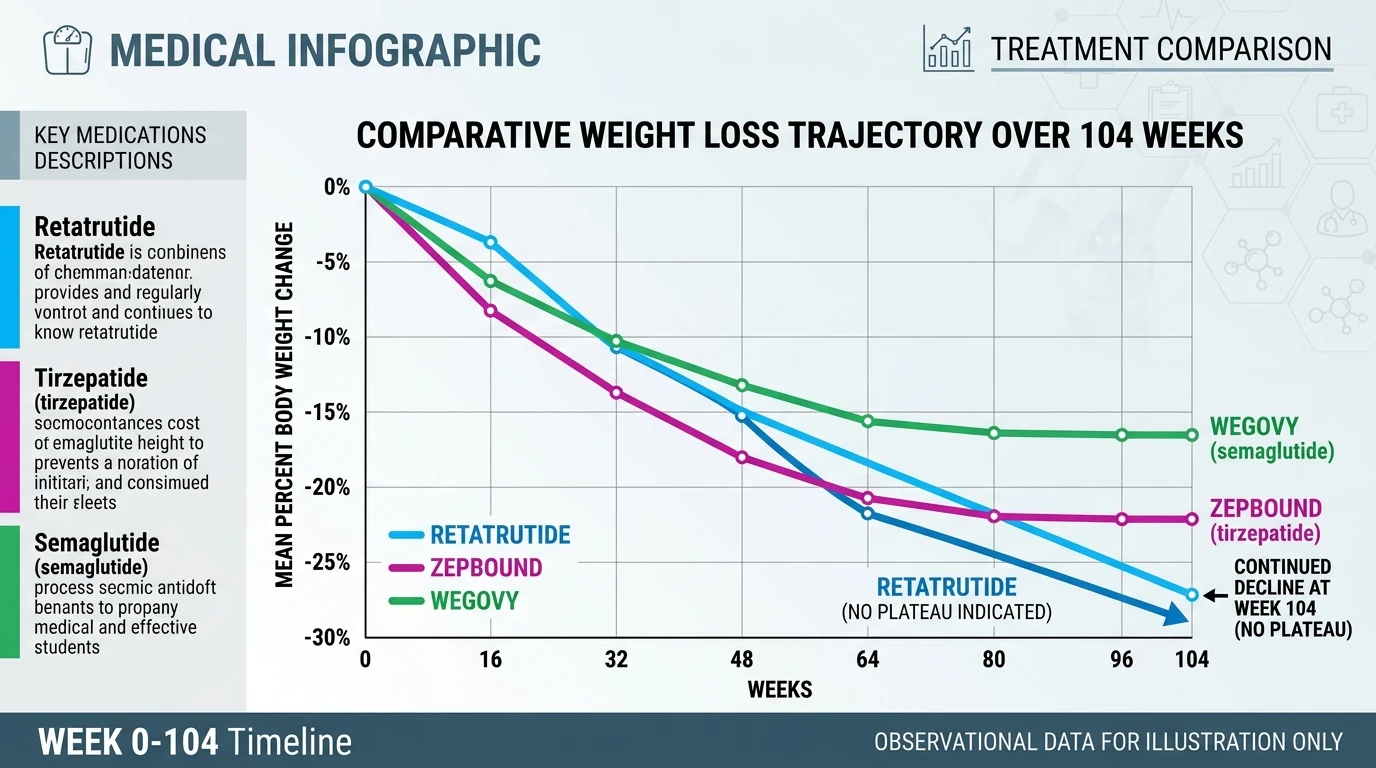 retatrutide weight loss plateau chart[/caption>
If you are experiencing a retatrutide weight loss plateau what to do is often a matter of systematic clinical and metabolic adjustments. If you have hit a true weight loss stall (defined as no weight loss and no change in body measurements for at least 4 consecutive weeks), use this clinical troubleshooting checklist:
Navigating next-generation peptide therapies requires a deep understanding of metabolic pathways, endocrinology, and body composition. Attempting to self-prescribe via compounding pharmacies or online peptide sites lacks the safety, accuracy, and comprehensive care required for long-term, sustainable weight management.
At Cardiomender Weight Loss & Aesthetics, our programs are led by experienced clinicians, including Dr. Aaron Welch, Jannelle Gratereaux, and Shari Unger. We provide South Florida patients with a complete, lab-guided weight loss ecosystem. Rather than just handing you a prescription, we utilize advanced bioimpedance technology to track your muscle mass weekly, ensuring that every pound you lose is fat, not metabolic tissue. At our clinic, we provide comprehensive, physician-led medical weight loss in Pembroke Pines, FL. We screen your blood panels to resolve underlying hormonal barriers, and we provide customized nutritional coaching to ensure you build habits that last.
If you are wondering, is retatrutide fda approved for public prescription yet? The answer is no—it remains an exciting investigational drug under active Phase 3 clinical evaluation. However, at Cardiomender Weight Loss & Aesthetics, we currently offer highly effective, FDA-approved clinical treatments. Whether you need a customized Semaglutide treatment in Pembroke Pines or advanced dual-agonist options, we customize your therapy to match your unique biology. You can read our patient success stories to see how this clinical-grade model transforms lives. If your weight loss has stalled, stop guessing and start succeeding under expert medical oversight.
Medical disclaimer: This article is for educational purposes only and does not constitute medical advice, diagnosis, or treatment. Retatrutide is an investigational drug that has not yet received final FDA approval for commercial sale. Dietary supplements are not evaluated by the FDA. Never adjust or discontinue any prescribed medication without the direct guidance of your healthcare provider. Read our full disclaimers.
Serving patients from across South Florida at our Pembroke Pines, FL clinic. Ready to break through your weight loss stall with a lab-guided, physician-led program? Request an appointment or call us today at (954) 799-6439; you can check our clinic hours before calling.
Our physician-supervised weight loss and aesthetic programs are designed around your unique body, goals, and lifestyle.