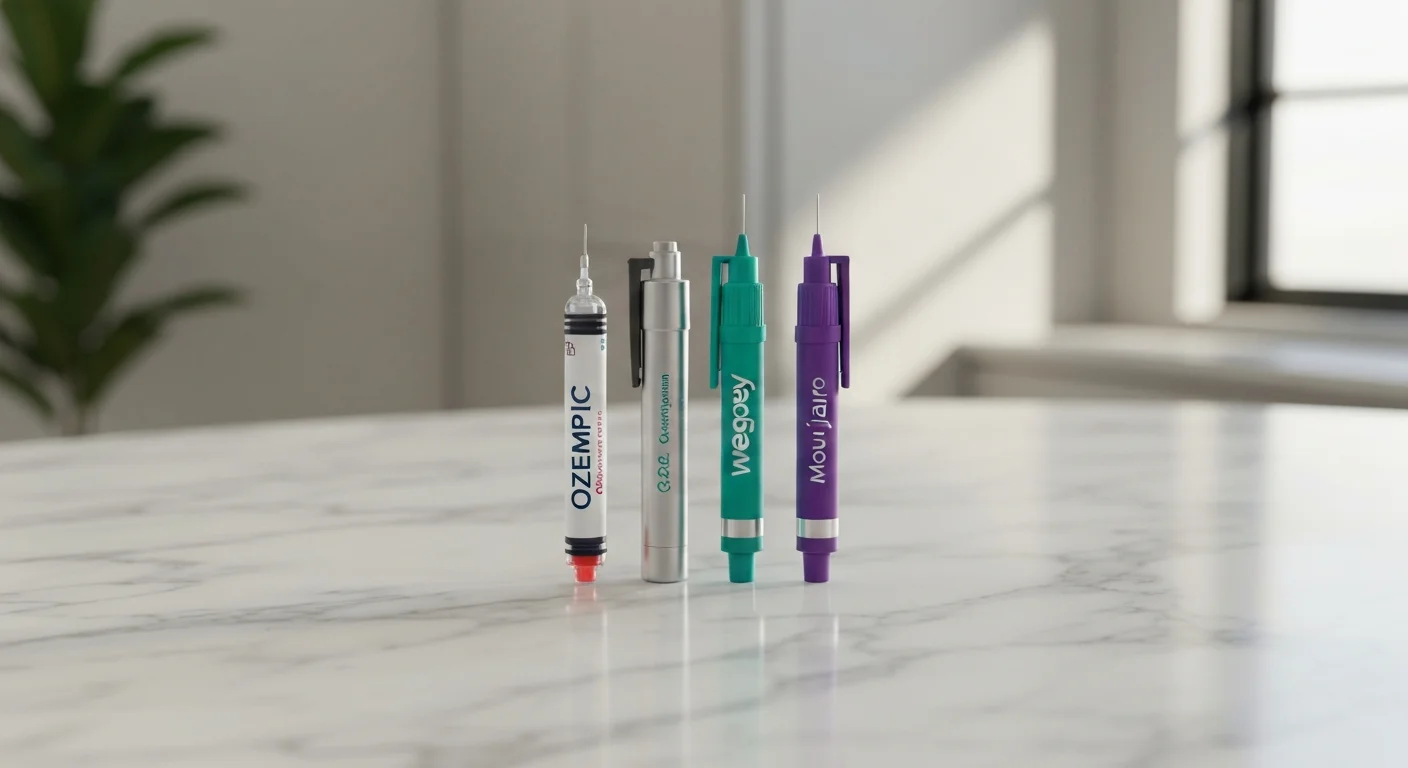
Compare Ozempic vs Wegovy vs Mounjaro to understand their clinical differences in weight loss, active ingredients, and type 2 diabetes management.
Choosing between Ozempic®, Wegovy®, and Mounjaro® requires evaluating your specific glycemic status, your metabolic biomarkers, and your therapeutic goals. For individuals presenting with Type 2 diabetes who require both glycemic regulation and moderate weight reduction, Ozempic or Mounjaro represents the appropriate clinical choice. For those seeking therapy primarily optimized for chronic weight management without Type 2 diabetes, Wegovy (or its dual-agonist equivalent Zepbound®) is the clinically indicated selection. Mounjaro and Zepbound, which utilize the dual-hormone agonist tirzepatide, consistently demonstrate superior average body weight reduction in clinical trials compared to the single-hormone agonist semaglutide found in Ozempic and Wegovy. Patients aiming for the most robust physiological weight reduction generally achieve greater outcomes with tirzepatide, whereas those seeking a well-established, highly tolerated single-hormone pathway often succeed with semaglutide. A comprehensive diagnostic evaluation at a specialized clinic remains essential to safely align these medications with your metabolic profile.
Medical weight loss programs require highly individualized administration to deliver optimal results. At CardioMender, MD Weight Loss Specialists, our medical team supervises each patient’s progress to support sustainable health outcomes. We customize programs based on clinical diagnostics, lab reviews, and lifestyle goals. If you reside in South Florida, our clinic offers the medical oversight necessary to navigate these advanced therapies safely. Serving patients from Miami, Fort Lauderdale, and surrounding areas at our Pembroke Pines clinic, we prioritize clinical precision over generalized prescriptions.
Disclaimer: This comprehensive medical guide is for informational purposes only and does not substitute for professional medical advice, diagnosis, or treatment. Always consult with a licensed physician or healthcare provider before initiating any new medication, weight loss program, or clinical therapy.
Comparing Ozempic, Wegovy, and Mounjaro reveals that while they all belong to the class of incretin mimetics, they differ significantly in their chemical structures, receptor targets, and clinical indications. Incretin hormones are natural signaling molecules that your gut releases after eating to regulate insulin secretion and appetite. Understanding these underlying biological mechanisms allows our clinical team to match the appropriate therapeutic agent to your unique metabolic needs.
The primary clinical difference centers on receptor targeting. Semaglutide, the active molecule in both Ozempic and Wegovy, selectively targets the glucagon-like peptide-1 (GLP-1) receptor. This single-receptor approach mimics the natural GLP-1 hormone, which effectively slows digestion and signals satiety directly to your brain. Tirzepatide, the active molecule in Mounjaro and Zepbound, operates as a dual-receptor agonist. It targets both the GLP-1 receptor and the glucose-dependent insulinotropic polypeptide (GIP) receptor, delivering a broader physiological impact on metabolic rate and adipose tissue distribution.
Clinical efficacy data highlights the therapeutic distinction between these single and dual-agonist compounds. In the benchmark SURMOUNT-1 clinical trial published by the New England Journal of Medicine, adult participants taking the maximum 15 mg dose of tirzepatide achieved an average body weight reduction of 20.9% over a 72-week period. Conversely, the landmark STEP 1 clinical trial, also published in the New England Journal of Medicine, found that semaglutide 2.4 mg (the dose used in Wegovy) produced an average weight loss of approximately 14.9% over 68 weeks. While both molecules represent breakthroughs, tirzepatide generally delivers more pronounced weight loss results due to its synergistic dual-agonist design.
A frequent and serious clinical mistake in modern weight loss therapy is the rapid, unmonitored escalation of doses. Many practitioners increase dosages too quickly to satisfy patient demands for rapid weight loss. This aggressive titration often triggers severe gastrointestinal side effects and accelerates muscle wasting. At CardioMender, MD, we actively avoid this mistake by utilizing slow, customized titration schedules. We pair medication with rigorous body composition monitoring to help ensure you lose fat, not vital skeletal muscle.
Wegovy and Ozempic both contain the identical active compound, Semaglutide, but they serve different therapeutic functions approved by federal regulators. Novo Nordisk manufactures both brands, utilizing the exact same underlying peptide. The primary differences between them lie in their approved medical indications, their maximum weekly maintenance dosages, and their commercial packaging designs.
The difference between Wegovy and Ozempic is best understood by looking at their clinical targets. The FDA approved Ozempic specifically to treat Type 2 diabetes. It helps lower HbA1c levels and reduces the risk of major adverse cardiovascular events in adults with established cardiovascular disease. Wegovy, on the other hand, is FDA-approved specifically for chronic weight management. It serves individuals with a body mass index (BMI) of 30 or greater, or 27 or greater when accompanied by at least one weight-related comorbidity such as hypertension or high cholesterol.
Because they address different medical conditions, their maximum clinical doses differ as follows:
This dosing variation directly impacts retail costs and insurance coverage. Commercial health insurance plans frequently approve coverage for Ozempic when a patient has a documented diagnosis of Type 2 diabetes. However, those same plans often deny coverage for Wegovy if they do not offer specific weight-loss benefits. Without insurance coverage, retail cash prices for either brand at standard pharmacies typically range from $900 to $1,300 per month. At CardioMender, MD, we help patients navigate these complex insurance barriers. We provide structured clinical pathways and structured program options at our Pembroke Pines clinic, serving residents across Hollywood, Miramar, and Miramar Beach.
The structural difference between Mounjaro and Ozempic lies in the number of metabolic pathways they target to regulate blood sugar and body weight. Ozempic utilizes semaglutide to activate the single GLP-1 receptor pathway. Mounjaro, manufactured by Eli Lilly, introduces tirzepatide, which acts as a dual GIP and GLP-1 receptor agonist. This difference in molecular engineering changes how your body processes nutrients and manages hunger signals.
Understanding the GIP hormone is key to recognizing why the dual-agonist approach is so effective. GIP is an incretin hormone that works in tandem with GLP-1 to enhance insulin secretion in response to elevated glucose levels. It also plays a vital role in regulating lipid metabolism within fat cells. When combined in a single molecule, GIP synergizes with GLP-1. This synergy helps minimize the intense nausea often associated with high-dose single GLP-1 agonists while amplifying overall metabolic clearance.
Choosing between semaglutide vs. tirzepatide depends heavily on your baseline metabolic health. Clinical data indicates that patients using Mounjaro generally achieve rapid improvements in insulin sensitivity. They also experience a more significant reduction in visceral adipose tissue compared to those using Ozempic. Visceral fat is the dangerous, deeply stored fat surrounding abdominal organs. It acts as a primary driver of cardiovascular disease and metabolic dysfunction.
At CardioMender, MD, we do not believe in a one-size-fits-all prescription model. Patients from Fort Lauderdale, Weston, and Miami visit our Pembroke Pines clinic to undergo detailed diagnostic testing. We evaluate fasting insulin levels, HbA1c, thyroid function, and full metabolic panels. If your lab results reveal profound insulin resistance, our medical team may recommend a dual-agonist approach. This helps correct the root hormonal imbalances that make traditional weight loss attempts so difficult.
Evaluating whether Wegovy or Mounjaro delivers superior clinical efficacy requires looking directly at the maximum tolerated doses in head-to-head clinical data. To make an accurate comparison, we must also introduce Zepbound. Zepbound contains the exact same active ingredient as Mounjaro (tirzepatide) but is branded specifically for chronic weight management. The FDA approved Zepbound based on clinical trials demonstrating its powerful ability to support weight loss in individuals without Type 2 diabetes, as detailed by the U.S. Food and Drug Administration.
When comparing maximum-dose Wegovy (2.4 mg semaglutide) against maximum-dose Zepbound or Mounjaro (15 mg tirzepatide), tirzepatide consistently shows higher weight loss percentages. Clinical trials show that while semaglutide helps patients lose an average of up to 14.9% of their body weight, tirzepatide users regularly average between 18% and 20.9% weight loss depending on diabetes status. This makes tirzepatide the most potent weight loss peptide currently available on the commercial market.
However, focusing solely on the highest percentage of weight loss can be a dangerous clinical mistake. Rapid weight loss often results in a severe loss of skeletal muscle tissue alongside fat loss. This muscle wasting decreases your basal metabolic rate, which can lead to rapid weight regain once therapy is discontinued. To prevent this, we monitor every patient’s fat and muscle mass throughout their program.
To safely maximize your weight loss while protecting your lean muscle tissue, our medical team recommends a structured, multi-step process:
While both medications primarily affect the digestive system, the side effect profiles of Mounjaro and Ozempic differ slightly due to their hormonal pathways. Because both peptides slow gastric emptying—the rate at which food leaves your stomach—gastrointestinal symptoms are the most common issues patients report. These symptoms are usually mild to moderate and typically occur when you first start the medication or when your dose is increased.
The most common side effects reported for both semaglutide and tirzepatide include:
Interestingly, some clinical data suggests that tirzepatide (Mounjaro) may cause slightly less severe nausea at equivalent weight-loss doses than semaglutide (Wegovy). This is because the GIP component in tirzepatide helps buffer the brain’s nausea centers, allowing for a gentler transition as your dose increases. However, individual patient experiences vary widely, and some people naturally tolerate semaglutide better than tirzepatide.
Both medications carry a FDA boxed warning regarding the potential risk of thyroid C-cell tumors. This warning is based on findings from rodent studies. Consequently, these medications are contraindicated for anyone with a personal or family history of Medullary Thyroid Carcinoma (MTC) or Multiple Endocrine Neoplasia syndrome type 2 (MEN 2). We perform a thorough medical screening for these conditions during your initial consultation.
At CardioMender, MD, we do not expect our patients to simply live with uncomfortable side effects. If you experience nausea or constipation, our clinical team adjusts your dose titration, offers targeted nutritional advice, and provides support to keep you comfortable. We also offer specialized lipotropic and B-vitamin injectables to help combat the fatigue that can sometimes occur as your body adjusts to a lower caloric intake.
Navigating the financial aspect of these therapies reveals that retail prices often present a significant barrier for self-pay patients in South Florida. If you pay entirely out-of-pocket at a traditional retail pharmacy, the cash price for Mounjaro or Zepbound typically ranges from $900 to $1,100 per month. Semaglutide options like Ozempic or Wegovy are often slightly higher, ranging from $1,000 to $1,300 per month depending on the pharmacy and available coupon programs.
Insurance coverage for these medications is highly variable and depends on your employer’s specific plan benefits rather than your medical need. Insurance companies frequently require a detailed prior authorization process. This process often demands proof of a Type 2 diabetes diagnosis for Ozempic or Mounjaro. For weight loss medications like Wegovy or Zepbound, many plans have strict exclusions. These exclusions can leave patients facing high retail costs even with a doctor’s prescription.
At CardioMender, MD, we believe medical weight loss should be accessible and financially predictable. Our practice provides comprehensive clinical programs that bundle medical consultations, laboratory reviews, metabolic testing, and personalized titration into a single program fee. To find the program that best fits your goals, we invite you to explore our weight loss program pricing in Pembroke Pines.
By bypassing retail pharmacy markups and insurance hurdles, our supervised programs offer South Florida patients a practical, stress-free path to treatment. We provide consistent access to high-quality care without the stress of commercial medication shortages or unexpected insurance denials.
This comparative matrix organizes the key clinical variables, approvals, and outcomes for the four major brand-name medications. This side-by-side comparison helps clarify which option may be best suited to your health needs.
| Feature / Brand | Ozempic® | Wegovy® | Mounjaro® | Zepbound® |
|---|---|---|---|---|
| Active Ingredient | Semaglutide | Semaglutide | Tirzepatide | Tirzepatide |
| Drug Class | GLP-1 Agonist | GLP-1 Agonist | Dual GIP/GLP-1 Agonist | Dual GIP/GLP-1 Agonist |
| Primary FDA Approval | Type 2 Diabetes | Weight Management | Type 2 Diabetes | Weight Management |
| Administration | Weekly Injection | Weekly Injection | Weekly Injection | Weekly Injection |
| Average Weight Loss | Up to 10% | Up to 14.9% | Up to 12% (Diabetes) | Up to 18% to 20.9% |
| Est. Cash Cost/Month | $900 – $1,000 | $1,200 – $1,300 | $900 – $1,100 | $1,000 – $1,100 |
The main difference is that semaglutide targets a single hormone receptor (GLP-1), while tirzepatide targets two hormone receptors (GLP-1 and GIP). This dual-action design allows tirzepatide to deliver more significant average weight loss and glycemic control for many patients. Semaglutide is the active ingredient in Ozempic and Wegovy, while tirzepatide is the active ingredient in Mounjaro and Zepbound.
Switching between these medications must be done under strict medical supervision to prevent severe gastrointestinal side effects or sudden changes in blood sugar. A physician will evaluate your current dosage and clinical response to determine a safe transition plan. Typically, your doctor will start you on an introductory or intermediate dose of the new medication after a brief washout period to ensure your body tolerates the transition safely.
Wegovy (semaglutide) and Zepbound (tirzepatide) are the two FDA-approved, brand-name options indicated specifically for chronic weight management in patients without diabetes. Clinical data demonstrates that Zepbound (tirzepatide) generally results in a higher average percentage of body weight loss compared to Wegovy. Our medical team will help you evaluate both options based on your clinical history, metabolic profile, and budget.
Clinical studies show that obesity is a chronic metabolic condition. If you stop taking these medications, your appetite-regulating pathways will return to baseline, which can lead to regaining the weight you lost. At CardioMender, MD, we address this challenge by combining your medication with personalized nutrition plan, lifestyle changes, and metabolic support. This comprehensive approach helps you build a strong foundation for long-term weight maintenance.
Yes, residents of South Florida can access these therapies through a supervised medical program. CardioMender, MD Weight Loss Specialists provides comprehensive, doctor-supervised weight loss programs at our Pembroke Pines clinic. We serve patients from across the region, including Miami, Fort Lauderdale, Davie, Weston, and Hollywood. To learn more about our custom programs, we invite you to learn about our medically supervised weight loss injections in Pembroke Pines.
Any rapid weight loss can result in the loss of lean skeletal muscle alongside body fat if it is not properly managed. To prevent this, our medical team uses advanced body composition monitoring to track your muscle mass throughout your program. We also design high-protein nutritional plans and offer supportive therapies like lipotropic injections to help you preserve muscle while losing fat.
If you are ready to explore your options and find the right weight loss therapy for your needs, contact our medical team today. Call (954) 799-6439 to discuss your options or schedule your consultation at CardioMender, MD Weight Loss Specialists.
Our physician-supervised weight loss and aesthetic programs are designed around your unique body, goals, and lifestyle.