
If you’re asking “why am I not losing weight on tirzepatide?”, the most likely answer is that the medication hasn’t failed. In most cases, one of three things is going on: you’re still on a low starting dose, you’ve hit a normal plateau, or something is blunting the drug’s effect. That something could be what…
If you’re asking “why am I not losing weight on tirzepatide?”, the most likely answer is that the medication hasn’t failed. In most cases, one of three things is going on: you’re still on a low starting dose, you’ve hit a normal plateau, or something is blunting the drug’s effect. That something could be what and how much you eat, side effects, missed or late doses, another medication, or a health condition that hasn’t been treated yet. The data are reassuring. In the 72-week SURMOUNT-1 trial published in the New England Journal of Medicine, 85% to 91% of people on tirzepatide lost at least 5% of their body weight. A later analysis of the same trial, published in Diabetes, Obesity and Metabolism, found that about 18% of participants had lost less than 5% by week 12, and 90% of those slow starters still reached that mark by week 72.
Zepbound® and Mounjaro® both contain tirzepatide, so everything here also applies if you’re not losing weight on Zepbound or Mounjaro. They are approved for different purposes, though: according to the Mounjaro prescribing information, Mounjaro is approved for type 2 diabetes, not for weight management. Individual results vary. This guide from Cardiomender Weight Loss & Aesthetics will help you work out which situation you’re in, what a clinician checks, and what to bring to your next visit. If you’re new to the medication, start with our overview of tirzepatide treatment.
If you’re on tirzepatide and not losing weight, place yourself on the timeline before you look at causes. What counts as “not working” at week 3 is very different from what counts as “not working” at month 6. The table below combines the dosing schedule in the Zepbound prescribing information with the SURMOUNT-1 response data.
| Where you are | What the evidence says is expected | Reasonable next step |
|---|---|---|
| Weeks 1-4, on 2.5 mg | 2.5 mg exists to help your body adjust and is not approved as a maintenance dose. Little or no change on the scale is common. | Keep your weekly schedule. Log meals, protein and any side effects. |
| Weeks 5-12, still stepping up (5 mg, 7.5 mg) | Appetite often changes before the scale does. About 18% of SURMOUNT-1 participants had lost less than 5% at week 12. | Run the 2-week self-audit below and raise it at your next dose visit. |
| About 3-6 months in, under 5% lost despite steady weekly doses | Among slow starters, 70% crossed 5% by week 24. The average time to reach 5% in that group was 24.8 weeks. | Book a dose and medical review with your prescriber. |
| Lost weight, then about 4 weeks or more with no change | Likely a plateau, which is expected as your body adapts. | Self-audit, then a review. Don’t increase your dose yourself. |
| On your highest tolerated dose for several months, under 5% total | Possible true non-response. In SURMOUNT-1, 9% to 15% hadn’t reached 5% at 72 weeks. | Discuss other options with your clinician. |
| Severe belly pain, vomiting, can’t keep fluids down, or allergic symptoms | These are safety warnings, not a weight question. | Call your clinician now (see the red-flag section below). Call 911 in an emergency. |
The time points in this table (“about 4 weeks with no change”, “several months on your highest dose”) are when clinicians commonly reassess, not hard medical cutoffs. Your prescriber may judge your timeline differently based on your starting weight, health conditions and side effects. For a week-by-week picture of the early phase, see our guide on how long tirzepatide takes to work.
Tirzepatide acts on two gut hormone receptors: GLP-1 (glucagon-like peptide-1) and GIP (glucose-dependent insulinotropic polypeptide). Together, these signals reduce appetite, help you feel full sooner, and slow how quickly food leaves your stomach (gastric emptying). That’s why most people eat less on it. But “less” isn’t “nothing”, and the drug works alongside diet and activity rather than replacing them.
So how much weight can you lose on tirzepatide? Averages from the major trials give a fair benchmark. They come from the 72-week SURMOUNT-1 trial (adults without diabetes), the 72-week SURMOUNT-2 trial in The Lancet (adults with obesity and type 2 diabetes), and an analysis of SURMOUNT-1 women by reproductive stage in the journal Obesity.
| Group (trial) | Average body-weight change | Share who lost at least 5% |
|---|---|---|
| 5 mg, no diabetes (SURMOUNT-1, 72 weeks) | −15.0% | 85% |
| 10 mg, no diabetes (SURMOUNT-1) | −19.5% (50% lost 20% or more) | 89% |
| 15 mg, no diabetes (SURMOUNT-1) | −20.9% (57% lost 20% or more) | 91% |
| Placebo (SURMOUNT-1) | −3.1% | 35% |
| 10 mg / 15 mg, with type 2 diabetes (SURMOUNT-2, 72 weeks) | −12.8% / −14.7% (placebo −3.2%) | 79% to 83% |
| Women pre-, peri- and postmenopause, 15 mg or maximum tolerated dose (SURMOUNT-1) | About −26% / −23% / −23% (placebo 2% to 3%) | 97% to 98% |
Three things to keep in mind when you compare yourself with these numbers. First, they are averages, and the range around them is wide: some people lose far more, others far less. Second, trial participants also got counseling on a reduced-calorie diet and more physical activity. Third, a 2025 joint advisory from four obesity and nutrition societies, published in the American Journal of Clinical Nutrition, notes that real-world weight loss on these drugs tends to be modestly lower than in trials. Results may vary, and a smaller loss than the trial average is not the same as the drug “not working”. You can see how outcomes typically build month by month in our article on tirzepatide weight loss results.
What the FDA has approved, exactly. Zepbound is approved, together with a reduced-calorie diet and increased physical activity, to reduce excess body weight and keep it off long term in adults with obesity, or adults with overweight and at least one weight-related condition. It is also approved for moderate-to-severe obstructive sleep apnea in adults with obesity, which the FDA announced in December 2024. Mounjaro is approved to improve blood sugar control in type 2 diabetes (adults and children 10 and older) and to reduce the risk of major cardiovascular events in adults with type 2 diabetes at high cardiovascular risk. Mounjaro is not approved for weight management. If you want the practical differences between the two brands, read Mounjaro vs. Zepbound, or see how we approach Zepbound for weight loss.
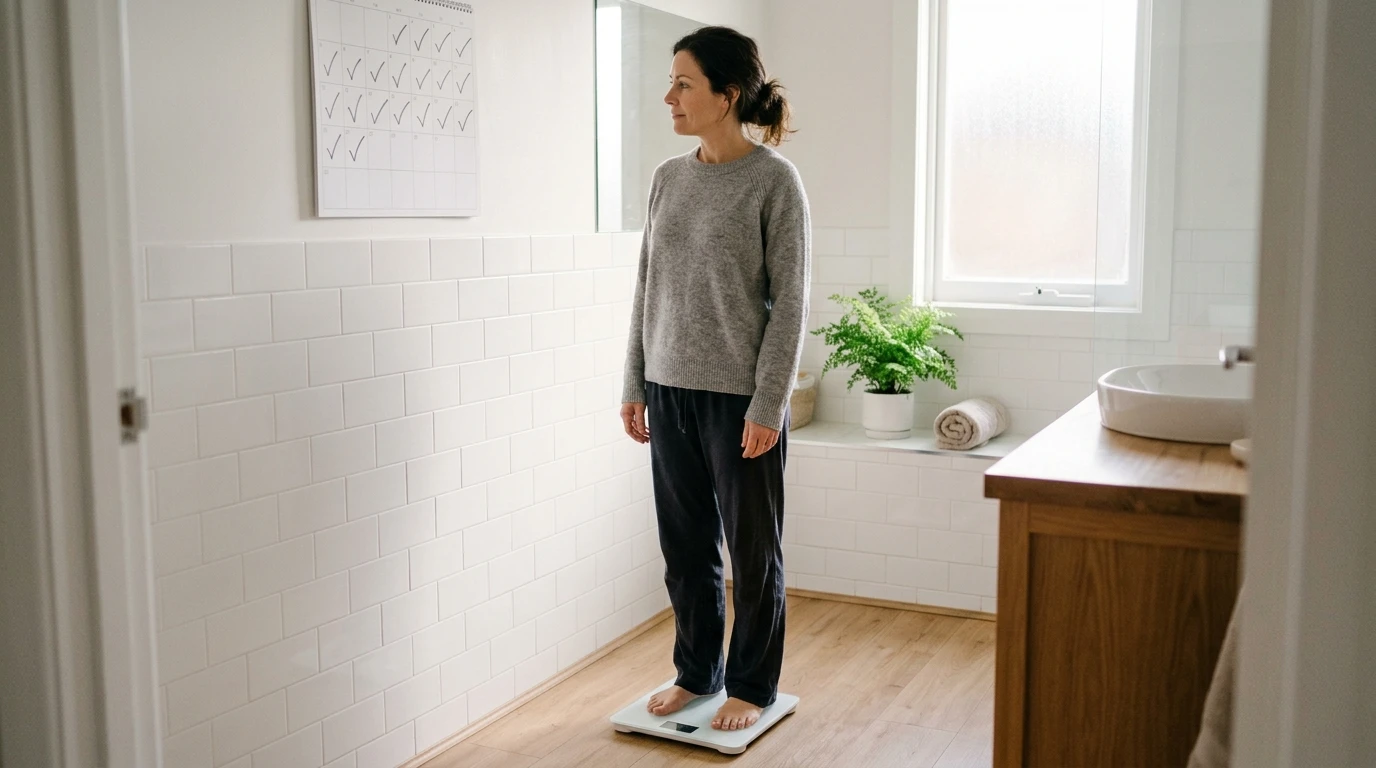
People use “not working” for three very different situations. Each one has a different explanation and a different fix, so it helps to tell them apart.
The Diabetes, Obesity and Metabolism analysis looked at 1,545 SURMOUNT-1 participants who took at least 75% of their doses. About 18% were “late responders”, meaning they had lost less than 5% by week 12. They weren’t failures: 70% of them reached 5% by week 24 and 90% by week 72. On average, it took them 24.8 weeks to reach the 5% mark. Late responders were more often men (45% vs. 30% of early responders) and started heavier (an average of 110.2 kg vs. 103.6 kg). The authors concluded that continuing treatment well beyond 12 weeks may help people who start slowly. If you’re a few months in and frustrated, you may simply be in this group.
Every weight loss plateau happens for the same basic reason. As you lose weight, your body burns less energy, and your appetite pushes back by nudging you to eat more. Eventually intake and expenditure meet at a new balance point, and the scale stops moving. A 2024 modeling paper in Obesity by Kevin Hall of the NIH’s NIDDK suggests that tirzepatide weakens that appetite feedback circuit (the “eat more as weight drops” signal). That extends the period of weight loss before a plateau, while calorie restriction alone didn’t do this in his model. The author describes the work as preliminary modeling, but the point holds: tirzepatide delays the plateau, it doesn’t abolish it. If it feels like tirzepatide stopped working after a good start, this is usually what’s happening. A plateau after substantial weight loss may mean you’re approaching a stable weight on your current dose and habits. That isn’t a failure, and it’s worth discussing with your clinician whether that weight is a reasonable goal.
Clinicians usually define a meaningful response as losing at least 5% of your starting weight. By that standard, roughly 9% to 15% of SURMOUNT-1 participants (depending on dose) hadn’t reached 5% by week 72. That’s uncommon, but real. Researchers can’t yet fully explain why some people respond less, and it isn’t a sign of personal failure or lack of willpower. Even with a smaller weight change, other health markers may improve: the SURMOUNT-1 trial reported improvements in all of its prespecified cardiometabolic measures alongside weight loss. If you’ve been on your highest tolerated dose for several months and are still under 5%, that’s the moment for a frank conversation with your prescriber about other options, including how tirzepatide compares with semaglutide.
For each reason below, you’ll find what’s going on, what a clinician typically checks, and what you can safely do yourself. Several can apply at the same time.
Tirzepatide starts low on purpose. According to the Zepbound label, you start at 2.5 mg once weekly for 4 weeks, and that dose “is not approved as a maintenance dosage”. After that, your prescriber can increase the dose in 2.5 mg steps, with at least 4 weeks at each step, up to a maximum of 15 mg. The maintenance dose (5 mg, 10 mg or 15 mg) is chosen based on how well you respond and how well you tolerate it. In SURMOUNT-1, it took 20 weeks to step up to 15 mg. So if you’re wondering why you’re not losing weight on tirzepatide at 5 mg or 7.5 mg, the honest answer is often that you’re still early in the process.
The same logic applies at 10 mg and 12.5 mg: those are steps, and your prescriber decides whether to keep going, stay put or try something else. What you shouldn’t do is raise the dose yourself, take two doses in one week, or combine products. Taking doses below the studied schedule isn’t a shortcut either; we explain why in our article on very low or “micro” doses of tirzepatide.
Digestive side effects are common with this drug class. A 2024 review in JAMA of liraglutide, semaglutide and tirzepatide reported nausea in 28% to 44% of patients, diarrhea in 21% to 30%, and constipation in 11% to 24%. In SURMOUNT-1, these effects were mostly mild to moderate and happened mainly while the dose was going up.
Side effects can slow weight loss in ways that aren’t obvious. If nausea pushes you toward crackers, white bread and juice, you may eat fewer meals but more refined carbs and very little protein. If you barely eat at all, you lose more muscle and feel too drained to exercise. Constipation can also add a pound or two to the scale for a few days. The AJCN advisory describes managing GI side effects as “critical” to successful treatment. Tell your clinician about any side effects rather than pushing through them. Many of the practical tips in our guide to practical ways to manage nausea apply to tirzepatide too, since the drugs share a mechanism.
Tirzepatide reduces appetite; it doesn’t switch it off. As your body adjusts, it’s common for portions to creep back up, especially from foods that don’t feel like “meals”: specialty coffees, smoothies, juice, cooking oils, nuts, grazing while you cook, and weekends. Alcohol is a double problem because it adds calories and lowers your guard around food; our article on alcohol on tirzepatide covers this in more detail. The fix isn’t to slash food further. Eating too little can backfire as well, which is why it helps to understand how big a calorie deficit is safe. A 3-day food log (see the self-audit below) usually shows where the gap is.
Not all weight lost on tirzepatide is fat. In a SURMOUNT-1 substudy that measured body composition with DXA scans (a low-dose X-ray that separates fat from lean tissue), published in Diabetes, Obesity and Metabolism, the 124 participants on tirzepatide (out of 160 in the substudy) lost 21.3% of body weight on average. Fat mass fell by 33.9% and lean mass by 10.9%. Overall, about 75% of the weight lost was fat and 25% lean mass, a ratio similar to the placebo group. Preserving lean mass matters for strength, metabolism and how you feel.
Your protein intake on tirzepatide is part of that. The AJCN advisory notes that the standard protein allowance is 0.8 g per kilogram of body weight per day, and that higher targets of 1.2 to 1.6 g/kg/day have been proposed during active weight loss. Which body weight to use (your actual weight or an adjusted one) isn’t settled, and actual weight can overestimate the need, so the right target is something to set with your clinician, especially if you have kidney disease. The worked example in the self-audit below shows the math. For more depth, read about tirzepatide and muscle loss and what to eat on tirzepatide.
The same advisory recommends strength training at least 3 times a week plus at least 150 minutes a week of moderate aerobic activity, such as brisk walking, for people on GLP-1 therapy. Resistance exercise helps hold on to muscle while you lose fat. It also explains a common frustration: when you start lifting, the scale can stall for a few weeks while your waist keeps shrinking. That’s why waist measurements are part of the self-audit. If you’re starting from zero, our guide to exercise for weight loss has simple ways to begin.
Tirzepatide is designed for steady weekly dosing. The label’s missed-dose rule: take the missed dose as soon as possible within 4 days (96 hours). If more than 4 days have passed, skip it and take the next dose on your regular day. You can change your injection day if you need to, as long as the two doses are at least 3 days (72 hours) apart. The label also says to rotate injection sites with each dose (abdomen, thigh, or the back of the upper arm if someone else injects).
Missed weeks add up. Gaps caused by travel, pharmacy delays, insurance changes or running out of medication can mean you effectively restart, sometimes at a lower dose your prescriber chooses for tolerability. If doses have been irregular, tell your clinician exactly which weeks you missed rather than restarting on your own.
Storage affects any injectable medication. The Zepbound label says to keep single-dose pens and vials in the refrigerator at 36°F to 46°F, never freeze them, and keep them in the carton to protect them from light. If needed, a single-dose pen or vial can stay unrefrigerated (at or below 86°F) for up to 21 days in total. In a South Florida summer, a pen left in a hot car can easily go past that limit.
Many people searching “why am I not losing weight on tirzepatide compound” are using a compounded product. Here is the FDA’s position as of October 2026. Its statement on compounding policies says the tirzepatide shortage was declared resolved (a decision confirmed on December 19, 2024), that its temporary enforcement discretion for 503A compounding pharmacies has ended, and that “compounded drugs are not approved by FDA.” The agency’s page on concerns with unapproved GLP-1 drugs adds that the FDA doesn’t review compounded drugs for safety, effectiveness or quality before they’re sold. It has also received adverse-event reports linked to dosing errors with compounded GLP-1s (mistakes in measuring and calculating doses), and it warns about counterfeit products that may contain the wrong amount of active ingredient or none at all.
We can’t tell you whether a specific compounded product is weaker or stronger than labeled, and nobody can without testing it. What helps is telling your clinician the exact product, concentration and amount you inject, so they can rule out a measuring or product issue before drawing conclusions about your response.
The Endocrine Society’s clinical practice guideline on obesity medications notes that many drugs commonly prescribed for diabetes, depression and other chronic diseases can promote weight gain, and recommends choosing weight-favorable options when possible. Classes that can promote weight gain include some steroids, insulin and sulfonylureas, some antidepressants and antipsychotics, and some beta-blockers. Whether a given drug matters for you depends on the drug, the dose and your history.
New data put this in perspective. A 2026 post hoc analysis of the SURMOUNT trials, funded by the manufacturer and published in JAMA Network Open, found that about 1 in 5 participants started at least one weight-inducing medication during the trials (17.4% in SURMOUNT-1). In SURMOUNT-1, that group’s placebo-adjusted weight change still ranged from −13.3% to −21.3% depending on dose, which the authors described as comparable with the main results. In other words, another medication can make the job harder, but it rarely stops tirzepatide from working.
Never stop or cut back a prescribed medication on your own. Ask the prescriber who manages it whether a weight-neutral alternative exists. One safety note: taking tirzepatide with insulin or a sulfonylurea raises the risk of low blood sugar, so those doses need to be managed by your care team.
People with type 2 diabetes tend to lose less weight on tirzepatide. In SURMOUNT-2, the average was 12.8% to 14.7%, compared with 15.0% to 20.9% in SURMOUNT-1 participants without diabetes. If you’re comparing yourself with a friend who doesn’t have diabetes, that gap is expected. If you’re taking Mounjaro for type 2 diabetes and the scale isn’t moving, remember that its approved purpose is blood sugar control (along with cardiovascular risk reduction in high-risk adults). Your A1c and glucose readings are the primary measure of whether it’s working, and your prescriber should review them with you.
An underactive thyroid can make weight loss harder. According to the NIDDK, nearly 5 out of 100 Americans ages 12 and older have hypothyroidism, and weight gain is a common symptom. But fatigue and weight gain “do not necessarily mean you have a thyroid problem”. It can’t be diagnosed from symptoms alone; doctors confirm it with thyroid blood tests. PCOS (polycystic ovary syndrome) is also linked with insulin resistance and can make weight loss harder; it’s diagnosed through an evaluation, not by symptoms alone. Read more about the hormones that affect weight loss.
Menopause is often blamed, but the data don’t support the idea that it blocks tirzepatide. In the Obesity analysis of SURMOUNT-1 women on 15 mg or their maximum tolerated dose, average weight loss was about 26% before menopause and about 23% in both perimenopause and postmenopause, and 97% to 98% of women in each group reached at least 5%. Hormonal changes can still affect sleep, mood and body fat distribution. If menopausal symptoms or possible low testosterone are part of the picture, they need a proper medical evaluation and diagnosis. Hormone therapy is never something to start on your own; it requires lab testing and ongoing medical supervision. Our pages on hormone therapy for women and testosterone evaluation and treatment explain how that evaluation works.
The CDC recommends 7 or more hours of sleep a night for adults 18 to 60 and lists staying at a healthy weight among the benefits of enough sleep. In a randomized trial in JAMA Internal Medicine, adults with overweight who usually slept less than 6.5 hours extended their sleep by about 1.2 hours a night and ate about 270 fewer calories a day than the control group. That trial didn’t involve GLP-1 drugs, but the physiology applies to everyone.
Loud snoring, gasping at night or heavy daytime sleepiness can point to obstructive sleep apnea, which is linked with weight and deserves a proper evaluation. Zepbound is FDA-approved for moderate-to-severe sleep apnea in adults with obesity; see our article on tirzepatide and sleep apnea. Chronic stress can also drive stress eating and poor sleep, even when appetite is lower.
Day-to-day weight can swing by a few pounds from water, salt, constipation, the menstrual cycle or a new workout. If you weigh yourself daily and react to each number, a normal week can look like failure. Weigh yourself 2 to 3 times a week at the same time of day, track the weekly average, and measure your waist every 2 weeks.

This checklist doesn’t replace a medical review, but it turns “it’s not working” into information your clinician can act on. Track these for 14 days:
Bring this to your appointment. If you aren’t yet in a supervised program, you can request an appointment and bring the audit to your first visit. For food planning, see our page on nutrition for weight loss.
Once your clinician has your audit and history, there are several levers they may adjust. All of these are clinical decisions, made with you, not changes to make yourself.
Don’t stop on your own because the scale stalled. In the SURMOUNT-4 trial in JAMA, participants lost an average of 20.9% during a 36-week lead-in on tirzepatide. Those then switched to placebo regained 14.0% of their weight over the following year, while those who stayed on tirzepatide lost a further 5.5%. Over the full 88 weeks, that worked out to −25.3% on tirzepatide vs. −9.9% for the group switched to placebo. A plateau while you’re on the medication often means it is holding your progress, not that it has stopped helping. Any plan to reduce or taper the dose over time should be made and monitored with your clinician.
Any conversation about tirzepatide not working should also cover safety. According to the Zepbound label, the most common side effects (in 5% or more of patients) are nausea, diarrhea, vomiting, constipation, abdominal pain, indigestion, injection-site reactions, fatigue, allergic (hypersensitivity) reactions, burping, hair loss and acid reflux. Hair loss is discussed in more detail in our article on hair loss on tirzepatide.
Some symptoms matter more than any number on the scale. Based on the warnings in the Zepbound label, contact your clinician promptly, or get urgent care, if you have:
For any medical emergency, call 911.
A stall is exactly the moment when a prescription alone stops being enough. Cardiomender has been helping South Florida patients with weight loss since 2009, years before GLP-1 drugs became household names. That experience shapes how our team handles a plateau or slow response:
If you’re already on tirzepatide elsewhere or just considering it, you can learn more about tirzepatide treatment in Pembroke Pines. Individual results vary, and treatment is only prescribed after a medical evaluation.
Yes. In SURMOUNT-1, roughly 9% to 15% of participants (depending on dose) hadn’t lost at least 5% of their body weight after 72 weeks. Many people who start slowly still respond, though: 90% of trial participants who were under 5% at week 12 reached it by week 72. Your clinician can help you tell a slow start from true non-response.
First, check where you are on the dosing timeline, since 2.5 mg is only a starting dose. Then run the 2-week self-audit above (doses, storage, food log, protein, exercise, sleep, medications) and bring it to your prescriber. Don’t increase your dose or add another product on your own.
Yes. Water, salt, constipation, hormones and new workouts can move the scale by a few pounds in either direction from day to day. Look at your weekly average and waist measurement over several weeks rather than any single weigh-in. A flat stretch of about 4 weeks or more is a reasonable time to check in with your clinician.
Five milligrams is the lowest maintenance dose and often a step in titration, so some people need more time or a dose adjustment. In SURMOUNT-1, 5 mg produced an average loss of 15.0% over 72 weeks, and the late-responder analysis showed slow starters took about 24.8 weeks on average to reach 5%. Whether to move up is your prescriber’s decision, based on your response and side effects.
Fifteen milligrams is the maximum approved dose, so a stall here usually means a plateau, a lifestyle or medication factor, or true non-response. Your clinician will review the causes in this guide and may order labs. If you’re still under 5% total loss after several months at your highest tolerated dose, it’s time to discuss other options.
Many people notice appetite changes within the first few weeks, but meaningful weight loss usually takes longer because the dose rises gradually over months. In the late-responder analysis, 70% of slow starters had reached 5% by week 24. Our separate guide on how long tirzepatide takes to work, linked in the timeline section above, covers this week by week.
There’s no fixed timeline, because it depends on your starting weight, dose, health conditions and habits. It helps to think in percentages: for someone who starts at 250 lb, 25 lb is 10% of body weight. The trials report average results after 72 weeks rather than the time to a set number of pounds, and individual results vary widely.
Compounded drugs are not FDA approved, and the FDA doesn’t review them for safety, effectiveness or quality before they’re sold, so their results can’t be assumed to match the trials. As of October 2026, the FDA considers the tirzepatide shortage resolved and has reported dosing errors with compounded GLP-1 products. If you use one, tell your clinician the exact product, concentration and amount you inject.
Sometimes. Higher doses produced more weight loss on average in SURMOUNT-1, but the maximum approved dose is 15 mg, and a higher dose can also mean more side effects. Your prescriber will weigh your response and tolerability before changing anything. Protein, strength training and sleep are often worth fixing first.
Not without talking to your clinician. In SURMOUNT-4, people who stopped tirzepatide after 36 weeks regained 14.0% of their body weight over the following year, while those who continued kept losing. A plateau on the medication may mean it’s maintaining your progress.
Yes, both contain tirzepatide, so the same reasons apply if Zepbound or Mounjaro isn’t working for you. The difference is their FDA approval: Zepbound is approved for chronic weight management and obstructive sleep apnea in adults with obesity, while Mounjaro is approved for type 2 diabetes and is not approved for weight management.
If you’re not losing weight on tirzepatide and want a clinician to look at the full picture, bring your 2-week self-audit to Cardiomender Weight Loss & Aesthetics at our Pembroke Pines clinic, serving patients across South Florida. Call (954) 799-6439 or contact us to schedule your consultation and talk to our team about your options.
Our physician-supervised weight loss and aesthetic programs are designed around your unique body, goals, and lifestyle.